Showing posts with label Learning focused culture. Show all posts

Tuesday, 5 August 2025

Google Gemini


Professional Development: Unpacking Google Gemini for Aotearoa Educators

As a teacher in New Zealand, the integration of AI tools like Google Gemini into our professional practice presents a significant opportunity to streamline workflows and enrich learning experiences. Gemini, an advanced AI assistant, is built on a multimodal model, meaning it can understand and process different types of information, including text, images, and code. This versatility is its core strength, allowing educators to move beyond simple text-based queries. The key functions for us as teachers include rapid content generation, from drafting lesson plans and creating rubrics to generating quiz questions and vocabulary lists. This can drastically reduce the time spent on administrative and preparation tasks, freeing up valuable time for direct student interaction and support.

Beyond content creation, Gemini’s integration with Google Workspace for Education is a game-changer. For those of us using Google Classroom, Docs, and Gmail, Gemini can summarise long email threads, draft communications to whānau, and even generate ideas for projects aligned to our curriculum. This seamless integration means we don't have to switch between multiple applications, making our digital workflow more efficient. Furthermore, features like "Gems" allow us to create custom AI experts tailored to specific learning needs. We could, for example, create a "study partner" Gem that provides support and practice materials on a particular topic, grounded in our own classroom resources. This moves AI from a general tool to a personalised assistant for both teachers and students.

However, as we embrace these powerful tools, it's crucial to approach their use with a critical and ethical lens. While Gemini is a powerful co-creator and time-saver, it is not a replacement for our professional expertise. We must always fact-check and refine any AI-generated content to ensure its accuracy, cultural appropriateness, and alignment with the New Zealand Curriculum and our school's values. As kaiako, our role is to model responsible digital citizenship, teaching our students how to use these tools ethically. The goal is to use Gemini to amplify our teaching, not to automate it entirely, fostering critical thinking and creativity in a way that respects academic integrity and promotes a balanced integration of technology into the learning process.

Thursday, 12 June 2025

Assessment for Learning ( AFL)

Teacher Reflection: Assessment for Learning

Engaging with the concept of Assessment for Learning (AfL) has significantly shifted how I view assessment in the classroom. Rather than seeing it as a final judgment of student ability, I now understand AfL as an ongoing process that supports learning and growth. It involves using evidence of student understanding to inform teaching and help students take ownership of their progress. This includes practices like learning intentions, success criteria, peer and self-assessment, and timely feedback. When implemented well, AfL builds clarity and confidence in learners and helps them see the purpose behind their work.

One of the most effective strategies I’ve adopted is sharing clear learning intentions and co-constructing success criteria with students. This helps them understand what they are working towards and how they will know when they’ve succeeded. It has been especially powerful in supporting diverse learners, as it allows me to tailor my teaching to meet students’ needs in real-time. I've also seen students become more reflective and independent when they are encouraged to assess their own work or give feedback to peers. These routines foster a classroom culture where mistakes are viewed as learning opportunities.

Assessment for Learning has also strengthened the relationship between teaching and assessment. Rather than relying solely on tests or final products, I now gather a wider range of evidence, such as class discussions, learning conversations, and ongoing observations, to understand student thinking. This holistic approach has improved the quality of my planning and allowed me to be more responsive and flexible. As I continue to develop in this area, I aim to deepen students’ involvement in the assessment process so they can set goals, monitor progress, and take greater responsibility for their learning journey.

Thursday, 22 May 2025

SCIENCE OF LEARNING

 Science of Learning

Engaging with the Science of Learning has deepened my understanding of how students acquire, retain, and apply knowledge. Grounded in cognitive science, this research highlights the importance of working memory, retrieval practice, and spaced repetition. I’ve realized that effective teaching is about delivering content and designing learning experiences that align with how the brain processes information. For example, I now incorporate more regular low-stakes quizzes and opportunities for students to recall prior knowledge, helping them strengthen memory pathways and make meaningful connections.

One of the most impactful ideas I’ve taken from the Science of Learning is the need to manage cognitive load. In the classroom, this means breaking down complex tasks, using visuals to support explanations, and giving students time to practise new skills without being overwhelmed. I’ve also become more conscious of the importance of clarity and structure—ensuring that instructions, resources, and expectations are clear so students can focus on learning rather than trying to make sense of what’s required.

Finally, this research has reinforced the power of feedback and metacognition. Encouraging students to think about their thinking—through goal setting, self-assessment, and reflection—helps them become more self-directed learners. I now build in time for students to reflect on what strategies worked for them and where they can improve. Overall, the Science of Learning has provided me with practical, research-based strategies that make teaching more effective and learning more lasting.

Tuesday, 19 November 2024

Te Reo Maori

Teaching Te Reo Māori: Nurturing Language and Culture

Teaching Te Reo Māori in schools is an essential step toward preserving and revitalizing the language, as well as fostering cultural awareness and understanding among students. As one of New Zealand’s official languages, Te Reo Māori connects students to the rich history and traditions of Aotearoa. Integrating it into the classroom curriculum helps students appreciate the unique cultural identity of the Māori people while encouraging respect for diversity. By embedding the language into everyday learning, students develop a deeper connection to the land and its indigenous heritage.

A key aspect of teaching Te Reo Māori is creating an engaging and inclusive environment where students feel confident to explore and use the language. This involves starting with foundational elements such as basic greetings, numbers, and commonly used phrases, before progressing to more complex sentence structures and vocabulary. Using songs, games, and storytelling as teaching tools makes learning Te Reo fun and interactive. Incorporating tikanga (customs) and kaupapa Māori (Māori principles) into lessons further enriches the learning experience by connecting the language to cultural practices.

Effective teaching of Te Reo Māori also emphasizes cross-curricular integration, ensuring the language is not confined to isolated lessons. For example, students can practice counting in Te Reo during maths, label native plants in science, or use the language in creative writing and art projects. Such integration reinforces learning by making it part of their daily interactions, rather than treating it as a standalone subject. Schools that adopt a whānau-centered (family-oriented) approach also strengthen learning by involving families and communities, encouraging students to use Te Reo Māori outside the classroom.

Lastly, teaching Te Reo Māori fosters broader life skills such as empathy, open-mindedness, and a sense of identity. It provides students with tools to become culturally responsive citizens, equipped to navigate and contribute to a multicultural society. By normalizing the use of Te Reo in schools, educators play a pivotal role in the language's revitalization and ensure that future generations uphold the mana (prestige) of this taonga (treasure).

Tuesday, 6 August 2024

Comprehension Skills

 Why teaching comprehension skills is important?

Teaching comprehension skills is crucial for several reasons. First and foremost, comprehension is the foundation of all learning. Students need the ability to understand what they read to grasp new concepts, follow instructions, or apply knowledge effectively. Comprehension skills enable students to decode and interpret information, which is essential for success in all academic subjects, from mathematics and science to history and literature.

Secondly, strong comprehension skills enhance critical thinking and problem-solving abilities. Students who understand what they read can analyze texts, make inferences, and draw conclusions. This deeper level of engagement with the material encourages them to question assumptions, evaluate arguments, and think logically. These critical thinking skills are not only vital for academic success but also for navigating complex real-world situations.

Furthermore, teaching comprehension skills promotes lifelong learning and adaptability. In today's fast-paced, information-rich world, individuals must be able to continuously learn and adapt. Comprehension skills allow students to independently seek out information, understand new concepts, and stay informed about current events. This ability to learn autonomously is crucial for personal and professional growth in an ever-changing society.

Additionally, good comprehension skills are essential for effective communication. Understanding and interpreting written and spoken language accurately is fundamental to expressing ideas clearly and understanding others. This is particularly important in collaborative environments, where communication is key to successful teamwork and problem-solving. By developing strong comprehension skills, students can become better listeners, readers, and communicators.

Finally, teaching comprehension skills foster a love of reading and learning. When students can understand and engage with texts, they are more likely to enjoy reading and see it as a pleasurable activity rather than a chore. This positive attitude towards reading can inspire a lifelong passion for learning, opening up endless opportunities for intellectual and personal enrichment. Encouraging a love of reading not only supports academic achievement but also enriches students' lives by exposing them to diverse perspectives, cultures, and ideas.

In conclusion, teaching comprehension skills is essential for academic success, critical thinking, lifelong learning, effective communication, and fostering a love of reading. By prioritizing these skills, educators can equip students with the tools they need to thrive in school and beyond, ensuring they are well-prepared for the challenges and opportunities of the future.


Wednesday, 31 July 2024

Spelling


Why teaching Spelling is important?

Teaching spelling is fundamental for several reasons, starting with its role in enhancing literacy skills. Proper spelling is a cornerstone of effective written communication. It ensures that the writer’s message is clear and comprehensible. When individuals spell words correctly, they avoid misunderstandings and can convey their ideas more precisely. This is particularly important in professional and academic settings, where clear communication is crucial.

Moreover, teaching spelling aids in developing reading skills. Spelling instruction often involves phonics, which helps students understand the relationship between letters and sounds. This understanding is essential for decoding words while reading. When students learn to spell, they simultaneously improve their ability to recognize words quickly and accurately, which enhances reading fluency and comprehension. In essence, spelling and reading are interconnected skills that reinforce each other.

Additionally, spelling instruction contributes to vocabulary development. Learning to spell words often involves understanding their meanings, origins, and usage. This process enriches students’ vocabulary and deepens their grasp of the language. A robust vocabulary is crucial for effective communication, critical thinking, and academic success. By expanding their word knowledge through spelling, students can express themselves more precisely and creatively.

Lastly, teaching spelling promotes cognitive development. The process of learning to spell involves memory, pattern recognition, and problem-solving skills. Students learn to recognize patterns in words, remember spelling rules, and apply these rules to new words. This cognitive exercise enhances their overall intellectual abilities and prepares them for more complex learning tasks. Furthermore, mastering spelling boosts students' confidence and encourages a positive attitude toward learning, fostering lifelong literacy and educational engagement.


Monday, 27 November 2023

Spotek Words

 What is Spoken Words?


"Spoken words" refer to words that are uttered or vocalized by a person as part of oral communication. It involves the use of the voice to convey thoughts, ideas, information, or emotions to others. Unlike written words, which are communicated through written language, spoken words rely on spoken language, intonation, and other vocal elements.

Key characteristics of spoken words include:

  1. Oral Expression: Spoken words are articulated through the mouth and vocal cords. The speaker uses their voice to communicate with others.

  2. Intonation: The pitch, tone, and rhythm of spoken words contribute to the overall meaning and emotional expression. Changes in intonation can convey nuances, such as excitement, emphasis, or uncertainty.

  3. Contextual Cues: In spoken communication, context, body language, and facial expressions often play crucial roles in understanding the intended meaning of the words spoken.

  4. Immediate Interaction: Spoken words allow for real-time interaction between speakers and listeners. Feedback, questions, and clarification can be exchanged immediately.

  5. Informality: Spoken language can be more informal and spontaneous compared to written language. It often includes elements such as colloquialisms, slang, and conversational style.

Spoken words are a fundamental aspect of human communication and are used in various contexts, including everyday conversations, public speaking, presentations, storytelling, and more. The effectiveness of spoken communication depends not only on the words themselves but also on how they are delivered, the tone used, and the overall context in which they are spoken.


Monday, 29 May 2023

PD. Term 1. 2023.


 Trip to Northland

In the Term 1 2023 school holidays, some of the JBS staff went on a trip to Northland. This trip was one of our PD. I was, in particular, excited about this trip and was looking forward to going on this trip. The main focus of the trip was to learn the wonderful histories of the Northland. I was in search of a New Zealand history for my Inquiry LTP for term 2. So I decided to get on this trip. 


While we were in Northland, we learned numerous histories of the various parts of the region. One particular history that caught my attention was the Kauri Gum Field. The history behind the Kauri Gum Field is as follows below. 


Kauri gum is a resin (a sticky substance) produced by New Zealand’s giant kauri trees. The resin helps protect the tree by filling in holes and damaged areas. Kauri trees can live for more than 1,000 years, so they make a lot of gum over a lifetime. As the trees die and fall, the ground where they grew becomes littered with kauri gum. Over time, this often gets covered by soil or swamps. Most kauri gum is found in Northland.


From the 1840s, kauri gum was exported to Britain and America to make varnish. Later, it was used in linoleum, a floor covering. In the 19th and early 20th centuries, many people headed for the gum fields of Northland, hoping to find gum and sell it. They dug it out of the ground and found it in the swamps. Many of these areas no longer had kauri trees – they were scrublands covered in mānuka.


In the 1890s, it was getting harder to find gum in the ground. People started climbing living kauri trees to get gum. Some cut the trees, to make them bleed gum – but this often killed the trees.

The kauri gum industry continued into the 20th century. In the 1930s, cheaper materials for making varnish were invented. The price of kauri gum fell, and by the 1940s the gum industry was coming to an end.

What has once forested the most part of the Northland has deliberately disappeared. Only a few Kauri trees are left and they are completely protected.


Dalmatians, Māori, and British worked as diggers. They used a spear to find gum and a specially designed spade to dig it up. 

Storekeepers bought kauri gum from diggers. It was then taken to the nearest port and shipped to Auckland, where gum merchants cleaned it, graded it, and exported it. From 1850 to 1900, kauri gum was Auckland’s main export.


By the 1890s, it was getting harder to find gum in the ground. Some diggers began collecting gum from around the base of living trees and using ropes to climb to the forks where the gum was often found.

They also started cutting trees to make them bleed gum. They made V-shaped cuts called ‘taps’ in the trunk, returning months later to get the gum. Collectors used spikes on their boots and two long iron hooks to scale the tall trunks – in much the same way that ice climbers today scale frozen waterfalls with ice axes and crampons. The collectors carried ropes to get back down from the giant trees, which could be up to 50 meters high. It was dangerous work, and lives were lost. One story tells of some loggers finding a rope at the base of a large kauri. They felled the tree, and among the branches found the skeleton of a gum collector who must have climbed the tree and then dropped his rope.

At first, bled gum was seen as a ready new supply, although of poorer quality. However, it was soon clear that the practice was killing trees, and in 1905 it was banned in all state forests.


Storekeepers were the main buyers of kauri gum. They ‘grubstaked’ many diggers – allowed them to buy supplies on credit, on condition that they sold their findings to the storekeeper. Once a week the storekeeper did his rounds, delivering supplies and buying gum.

Gum was laid out at the gum tip – a cleared area, often on a rise so that it received the sun and wind. The gum’s purity was judged, a price was decided and the gum was weighed. Horse-drawn carts and large bullock teams pulled the gum on sleds to the nearest port. It was loaded onto barges, coastal cutters, and steamers, and shipped to Auckland. In the wet months, when Northland’s clay roads were boggy, transport costs often increased and supplies became more expensive.


Gum was unloaded at Auckland’s wharves and taken to the major buyers’ warehouses. It was then cleaned again and graded, ready for export. Gum was exported in boxes made from heart kauri, a high-quality timber that was often used to make furniture at the destination.


In the 1930s cheaper synthetics were developed for making varnish and linoleum. The price of gum fell, and by the 1940s it was a sunset industry. In 1985 a processing plant was built at Kaimaumau, north of Awanui, to extract resins and waxes from kauri chips and dust from a peat swamp, but it had technical problems and closed in 1989.


in varnish, but around 1910, overseas manufacturers began using poorer-grade gum to make linoleum. A market was created for low-grade gum, including small pieces known as gum nuts and chips, and previously worthless scrapings and dust.

New techniques were needed to recover small gum pieces from soil and swamps. Water-filled drums with screens – called hurdy-gurdies – washed away the soil and left behind the gum and bits of wood. Where large areas were dug over, pipes poured muddy water onto screens and sieves, and men agitated the mixture to wash away the soil. It was muddy, wet work. By the 1920s, new machines – basically larger oil-driven hurdy-gurdies, used by teams of men – could process a lot more raw material.

The material that was left after washing – gum, stones, bits of wood and debris – was dried in the sun. Then it was winnowed by throwing it in the air. A breeze carried away the lighter pieces, leaving gum behind. Later, winnowing machines were built, along with machines to separate the gum from worthless material and to clean it. Gold mining techniques were trialed – in the late 1910s a disused Otago gold dredge worked a swamp near Awanui, but without success.


Below is the link that tells the story of our trip to Northland. 

https://tome.app/jbs-a12/whakarongo-ki-te-hikoi-ki-te-rerenga-wairua-clgzkan6v00sb9r3z2t07uz4l


Thursday, 16 June 2022

Te Tiriti o Waitangi partnership

Demonstrate commitment to Tangata whenuatanga and Te Tiriti o Waitangi partnership in Aotearoa New Zealand.

Understand and recognize the unique status of Tangata Whenua in Aotearoa New Zealand. 

  • Communicates effectively with Māori parents and whānau about their child’s learning.

  • Engages with Māori learners, whānau, hapū, iwi, and Māori communities in open dialogue about teaching and learning.

  • Has respectful working relationships with Māori learners and their whānau, hapū, and iwi that enhance Māori learner achievement.

Understand and acknowledge the histories, heritages, languages, and cultures of partners to Te Tiriti o Waitangi.

  • Actively seeks ways to work with whānau to maximize Māori learner success.


  • Displays respect, integrity, and sincerity when engaging with Māori learners, whānau, hapū, iwi, and communities.


  • Demonstrably cares about Māori learners, what they think and why.

Practice and develop the use of te reo and tikanga Māori. 

  • Displays respect for the local Māori culture (ngā Tikanga-ā-iwi) in engaging with Māori learners, their parents whānau, hapū, iwi, and communities.

  • Incorporates Māori culture (including Tikanga-ā-iwi) in curriculum delivery and design processes.

  • Can describe how the Treaty of Waitangi influences their practice as a teacher in the New Zealand educational setting.

Consciously plans and uses pedagogy that engages Māori learners and caters to their needs.


Plans and implements programs of learning that accelerate the progress of each Māori learner identified as achieving below or well below expected achievement levels.


Actively engages Māori learners and whānau in the learning (partnership) through regular, purposeful feedback and constructive feed-forward.
Harnesses the rich cultural capital that Māori learners bring to the classroom by providing culturally responsive and engaging contexts for learning.


Actively facilitates the participation of whānau and people with the knowledge of local context, Tikanga, history, and language to support classroom teaching and learning programs.

Consciously uses and actively encourages the use of local Māori contexts (such as whakapapa, environment, Tikanga, language, history, place, economy, politics, local icons, and geography) to support Māori learners’ learning.

Validates the prior knowledge that Māori learners bring to their learning.


Maintains high expectations of Māori learners succeeding as Māori.

Takes responsibility for their own development of Māori learner achievement.


Ensures congruency between learning at home and at school.


Tuesday, 7 June 2022

Teaching

Teach and respond to learners in a knowledgeable and adaptive way to progress their learning at an appropriate depth and pace.

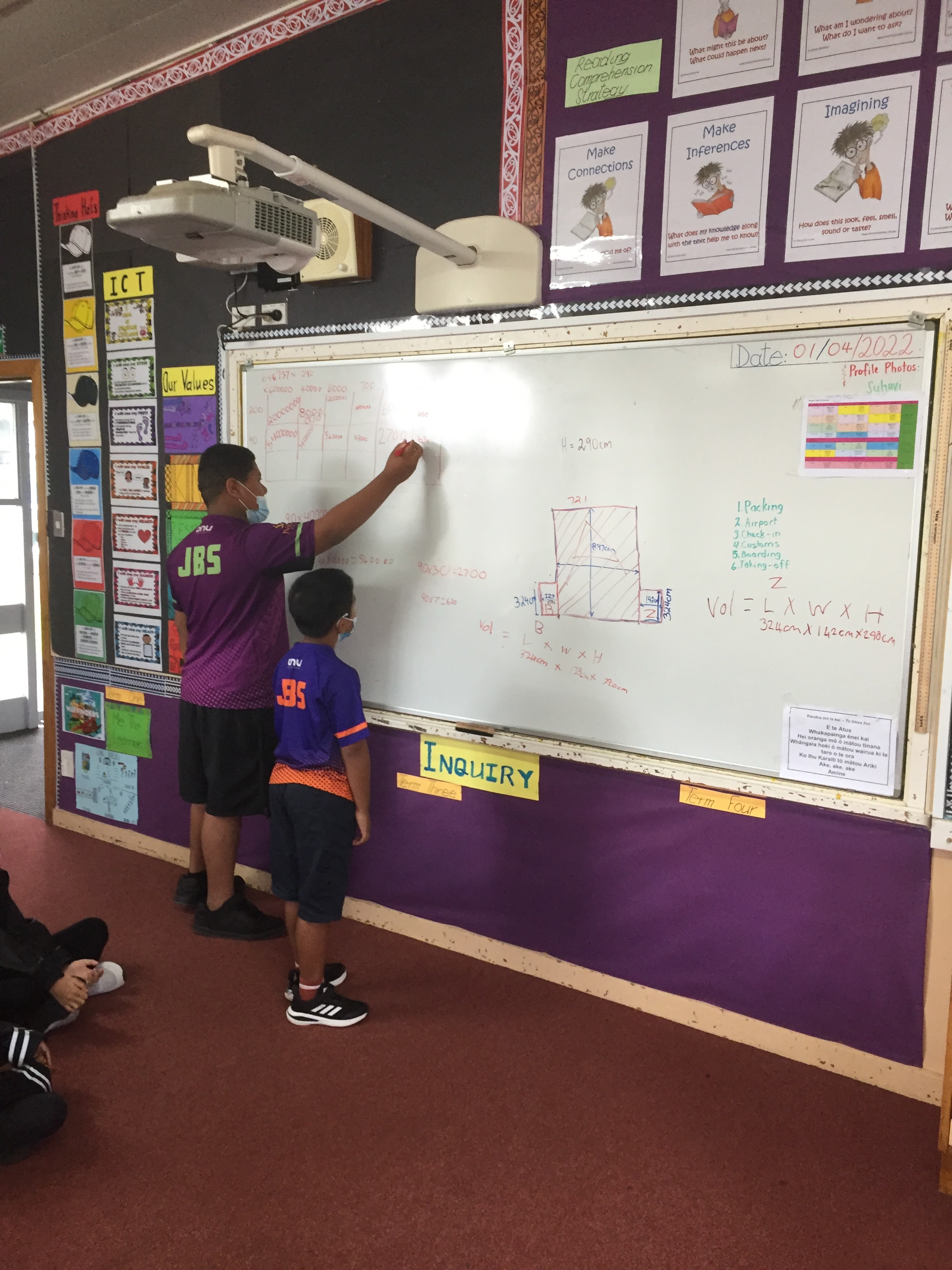
Use an increasing repertoire of teaching strategies, approaches, learning activities, technologies, and assessments for learning strategies and modify these in response to the needs of individuals and groups of learners.

Project-Based Learning is one of the best teaching strategies to engage students with diverse needs in a meaningful and effective way.


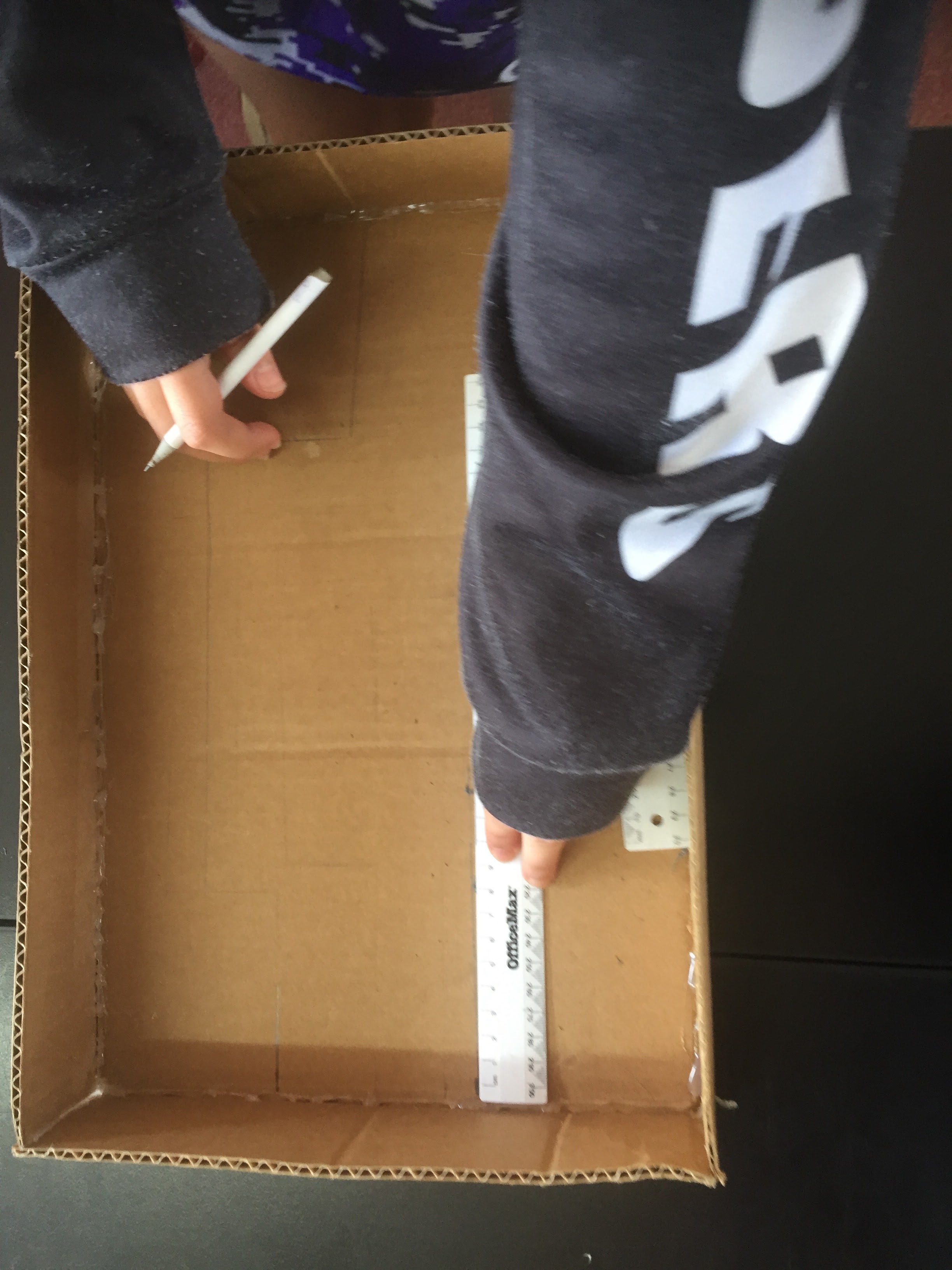
Here, the students are engaged in project-based learning by working together to fulfill their segment of the whole project. While the students are enjoying the collaborative nature of the learning tasks, it also gives them an opportunity to support each other for the benefit of the whole group.

Provide opportunities and support for learners to engage with, practice, and apply learning to different contexts and make connections with prior learning.


This project allows students to make connections with prior learning where they apply measurements, their ability to mark straight lines accurately before cutting, and the ability to use available learning tools such as hot glue guns in a safe and correct manner.


Teach in ways that enable learners to learn from one another, collaborate, to self-regulate, and develop agency over their learning.

Project-Based Learning permeates students to collaborate through completing their segment of the whole project. Each student is responsible for fulfilling his/her role for the successful outcome of the group effort.

Quite a wide range of Learner Agency are I action in project-based learning. Student voices are consistent and take over from the teacher. The students are the drivers of their learning and they navigate the pathway to success.

Ensure learners receive ongoing feedback and assessment information and support them to use this information to guide further learning.


As soon as students complete one stage of their project, they hand it in to the teacher for feedback.  The teacher assesses the stage that has been completed and decides whether further work is required or if the students are ready to move to the next phase. 


With the teacher's approval, students move on to the next phase with great satisfaction of completing the successive stages leading to the next.


Learning-focused culture: .


Create an environment where learners can be confident in their identities, languages, cultures, and abilities.

Room 6 has students from diverse cultural backgrounds. Therefore, it is imperative that teaching and learning also focus on students' identities and cultures. A good example is the students of Room 6 celebrating a week-long Samoan Language week to show their respect and tolerance towards each other and learn alongside each other in harmony and in a peaceful environment.


Develop an environment where the diversity and uniqueness of all learners are accepted and valued.


Below are the images of Room 6 students learning the English alphabet through the medium of sign language. This is in response to celebrating week-long sign language and also to accepting individual differences that are in all the learners.

Sign language is another form of communication that nearly all students can use and benefit from.  It’s an exciting and engaging language that connects students with a range of different people. Learning signs is a multi-sensory experience, and the visual and tactile nature of signing helps to engage a variety of learners. Plus, it’s super fun!


There are a number of benefits to introducing sign language to your students. Signs can help students with speech and language delays communicate more effectively, and they can give everyone another means of communication. One more tool in the communication tool belt!


Most importantly it gives students an opportunity to embrace diversity by learning not only another language but also the rich history and culture of the deaf/hard of hearing community. Learning about someone else’s language and culture helps students make new connections, and creates a sense of belonging for those in your community who use sign language.


Remember, sign language is different across countries and languages. Each sign language has its own structure and grammar rules and incorporates hand signs, body language, facial expressions, and lip patterns. Be mindful about the resources you are using, and if you are unsure, talk to someone from the deaf/hard of hearing community in your local school district.

Teaching signs for a range of vocabulary words (e.g. nouns, verbs, adjectives) helps broaden students’ knowledge. Teaching students how to find words by using online sign dictionaries or other resources can help them to be lifelong learners while giving them more tools to use when they meet someone from the deaf/hard of hearing community.


Greetings are a good place to start introducing some signs because they happen every day and are often the first things we say to someone when we meet them. This includes the signs for hello and goodbye and asking for someone’s name. It might be helpful to have students think about cultural behaviors when meeting someone from the deaf/hard of hearing community. 


Things like getting the person’s attention before signing, changing positions so it is easier to see signs, and taking turns in conversations so only one person is signing at a time


Demonstrate high expectations for the learning outcomes of all learners, including for those learners with disabilities or learning support needs.

Here are some of the recipients of high achievements. Their successes are celebrated by honoring them with tangible rewards to reinforce high expectations and empowering them to perform to the standards and try their best. At the same time, this is also an opportunity to inspire other learners to perform better.

Develop learning-focused relationships with learners, enabling them to be active participants in the process of learning, sharing ownership and responsibility for learning.


One of the best ways in which effective learning-focused relationships can be established is to provide opportunities to students to be active participants in the process of learning, sharing ownership and responsibility for learning. 

When students are taking ownership of their learning, they have a lot to share with their peers. they build their confidence to communicate freely and respectfully with others. This creates a kind of classroom environment where students find themselves safe to learn and need not worry about making mistakes in their learning. 

It is very important that students must have a very significant voice in their learning so that they feel that they are the major players in the design of the learning. 

Giving the responsibility to the students for their own learning gives a purpose to the students for coming to school every day. Students clearly are aware that they are the real deal in the classroom. Their aspirations and dreams take off in the classroom when they see themselves making steady progress in their learning,


Giving responsibility for their own learning show students how they are becoming better learners on a regular basis, particularly by embracing mistakes. I frequently share my own errors so that students realize it’s OK to mess up as long as we learn from it. I told my class about a major mistake I made while I was a student. Without the experiences of failure, we don’t get better. 


If students can make mistakes desirable, they truly experience the value of a growth mindset that encourages a “not yet” approach to learning. Students are more likely to own their growth if they realize that success is a process that involves some struggle.


Responding to feedback and making changes based on their suggestions communicates to students that we value their ideas and perspectives. If students feel comfortable providing input that is informative but not tied to a grade or other consequence, we can better address learning needs. Authentic success is the one students achieve by being responsible for their own learning.