Thursday, 16 June 2022

Te Tiriti o Waitangi partnership

Demonstrate commitment to Tangata whenuatanga and Te Tiriti o Waitangi partnership in Aotearoa New Zealand.

Understand and recognize the unique status of Tangata Whenua in Aotearoa New Zealand. 

  • Communicates effectively with Māori parents and whānau about their child’s learning.

  • Engages with Māori learners, whānau, hapū, iwi, and Māori communities in open dialogue about teaching and learning.

  • Has respectful working relationships with Māori learners and their whānau, hapū, and iwi that enhance Māori learner achievement.

Understand and acknowledge the histories, heritages, languages, and cultures of partners to Te Tiriti o Waitangi.

  • Actively seeks ways to work with whānau to maximize Māori learner success.


  • Displays respect, integrity, and sincerity when engaging with Māori learners, whānau, hapū, iwi, and communities.


  • Demonstrably cares about Māori learners, what they think and why.

Practice and develop the use of te reo and tikanga Māori. 

  • Displays respect for the local Māori culture (ngā Tikanga-ā-iwi) in engaging with Māori learners, their parents whānau, hapū, iwi, and communities.

  • Incorporates Māori culture (including Tikanga-ā-iwi) in curriculum delivery and design processes.

  • Can describe how the Treaty of Waitangi influences their practice as a teacher in the New Zealand educational setting.

Consciously plans and uses pedagogy that engages Māori learners and caters to their needs.


Plans and implements programs of learning that accelerate the progress of each Māori learner identified as achieving below or well below expected achievement levels.


Actively engages Māori learners and whānau in the learning (partnership) through regular, purposeful feedback and constructive feed-forward.
Harnesses the rich cultural capital that Māori learners bring to the classroom by providing culturally responsive and engaging contexts for learning.


Actively facilitates the participation of whānau and people with the knowledge of local context, Tikanga, history, and language to support classroom teaching and learning programs.

Consciously uses and actively encourages the use of local Māori contexts (such as whakapapa, environment, Tikanga, language, history, place, economy, politics, local icons, and geography) to support Māori learners’ learning.

Validates the prior knowledge that Māori learners bring to their learning.


Maintains high expectations of Māori learners succeeding as Māori.

Takes responsibility for their own development of Māori learner achievement.


Ensures congruency between learning at home and at school.


Tuesday, 7 June 2022

Teaching

Teach and respond to learners in a knowledgeable and adaptive way to progress their learning at an appropriate depth and pace.

Use an increasing repertoire of teaching strategies, approaches, learning activities, technologies, and assessments for learning strategies and modify these in response to the needs of individuals and groups of learners.

Project-Based Learning is one of the best teaching strategies to engage students with diverse needs in a meaningful and effective way.


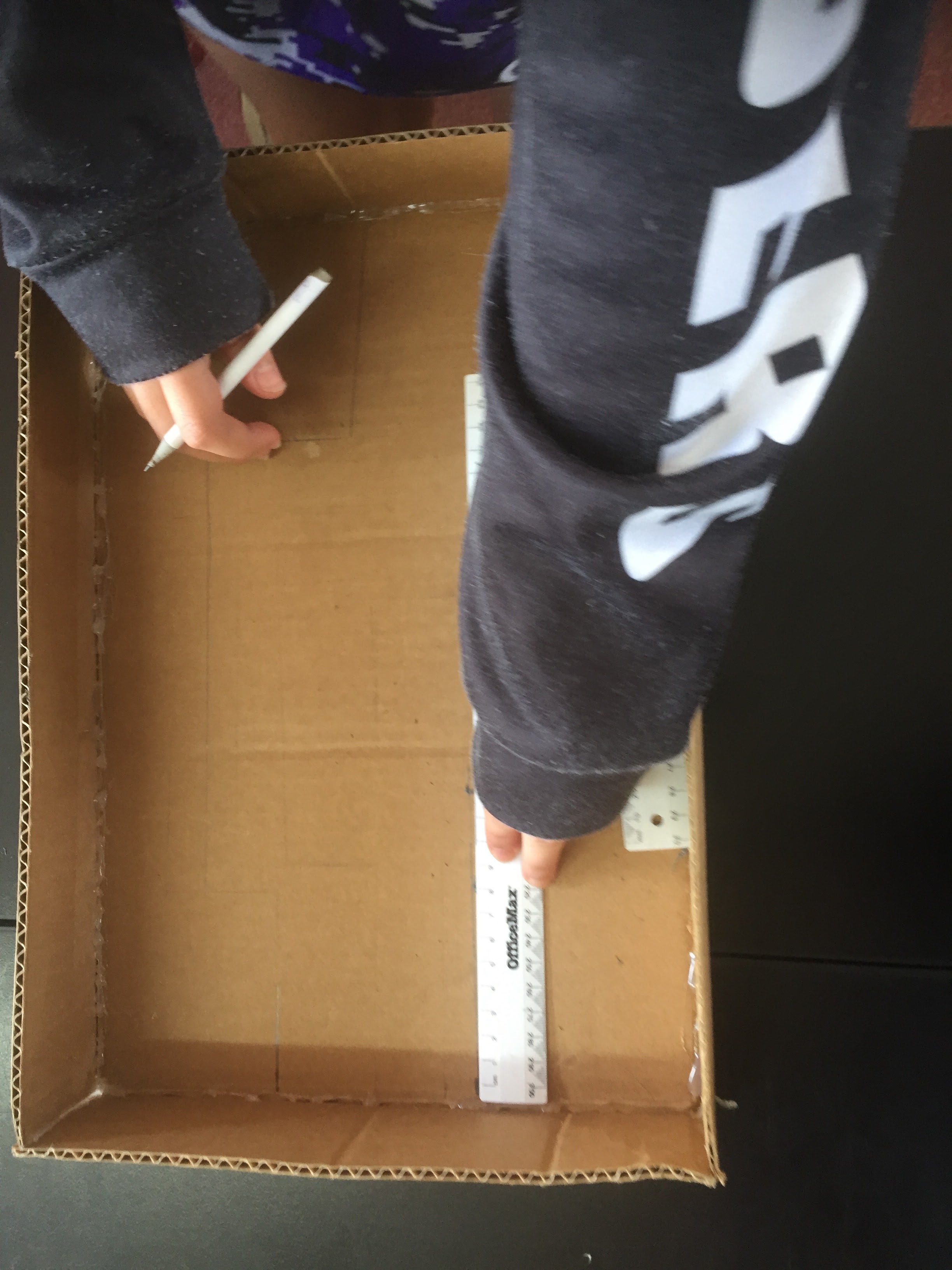
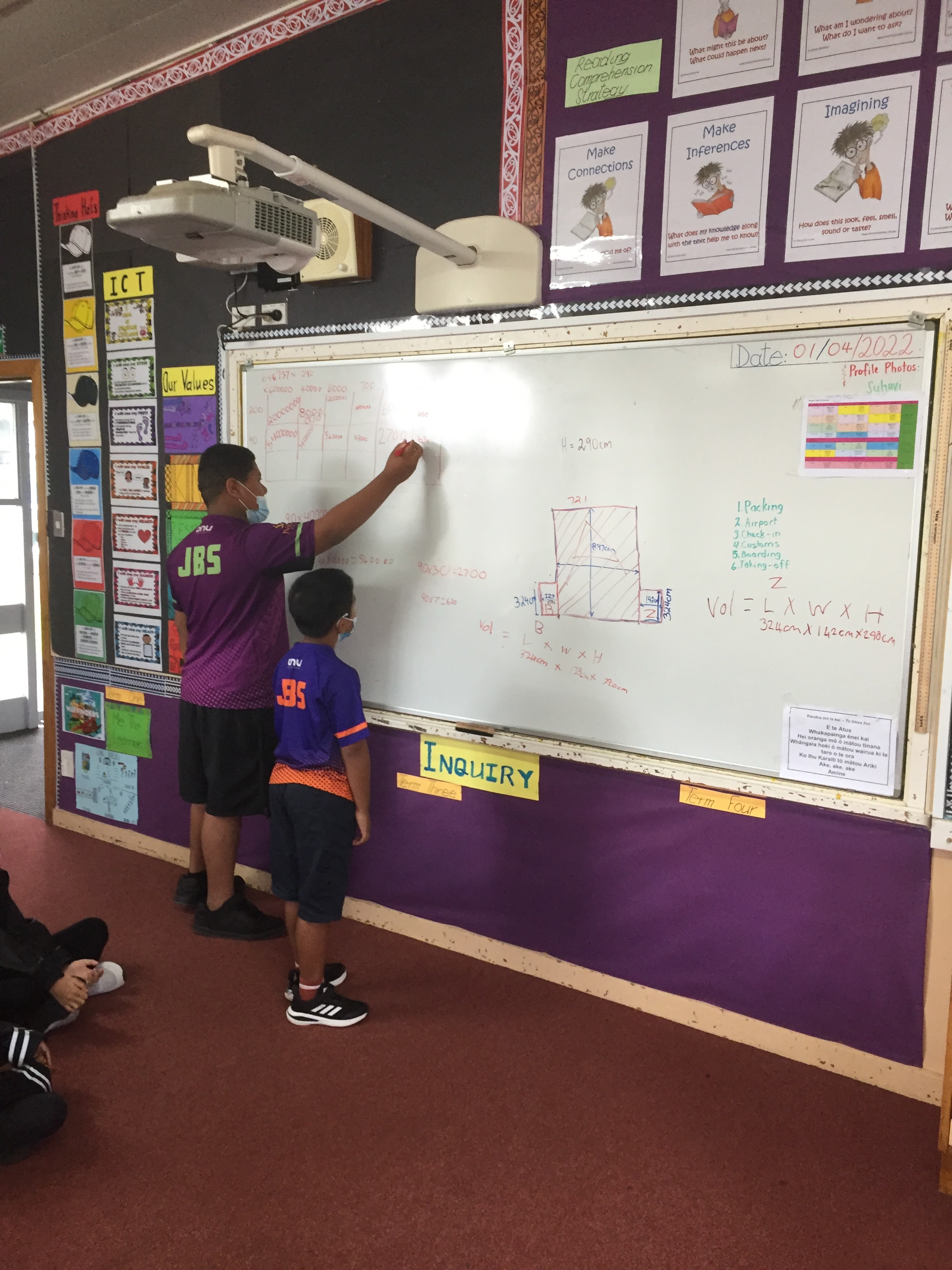
Here, the students are engaged in project-based learning by working together to fulfill their segment of the whole project. While the students are enjoying the collaborative nature of the learning tasks, it also gives them an opportunity to support each other for the benefit of the whole group.

Provide opportunities and support for learners to engage with, practice, and apply learning to different contexts and make connections with prior learning.


This project allows students to make connections with prior learning where they apply measurements, their ability to mark straight lines accurately before cutting, and the ability to use available learning tools such as hot glue guns in a safe and correct manner.


Teach in ways that enable learners to learn from one another, collaborate, to self-regulate, and develop agency over their learning.

Project-Based Learning permeates students to collaborate through completing their segment of the whole project. Each student is responsible for fulfilling his/her role for the successful outcome of the group effort.

Quite a wide range of Learner Agency are I action in project-based learning. Student voices are consistent and take over from the teacher. The students are the drivers of their learning and they navigate the pathway to success.

Ensure learners receive ongoing feedback and assessment information and support them to use this information to guide further learning.


As soon as students complete one stage of their project, they hand it in to the teacher for feedback.  The teacher assesses the stage that has been completed and decides whether further work is required or if the students are ready to move to the next phase. 


With the teacher's approval, students move on to the next phase with great satisfaction of completing the successive stages leading to the next.


Learning-focused culture: .


Create an environment where learners can be confident in their identities, languages, cultures, and abilities.

Room 6 has students from diverse cultural backgrounds. Therefore, it is imperative that teaching and learning also focus on students' identities and cultures. A good example is the students of Room 6 celebrating a week-long Samoan Language week to show their respect and tolerance towards each other and learn alongside each other in harmony and in a peaceful environment.


Develop an environment where the diversity and uniqueness of all learners are accepted and valued.


Below are the images of Room 6 students learning the English alphabet through the medium of sign language. This is in response to celebrating week-long sign language and also to accepting individual differences that are in all the learners.

Sign language is another form of communication that nearly all students can use and benefit from.  It’s an exciting and engaging language that connects students with a range of different people. Learning signs is a multi-sensory experience, and the visual and tactile nature of signing helps to engage a variety of learners. Plus, it’s super fun!


There are a number of benefits to introducing sign language to your students. Signs can help students with speech and language delays communicate more effectively, and they can give everyone another means of communication. One more tool in the communication tool belt!


Most importantly it gives students an opportunity to embrace diversity by learning not only another language but also the rich history and culture of the deaf/hard of hearing community. Learning about someone else’s language and culture helps students make new connections, and creates a sense of belonging for those in your community who use sign language.


Remember, sign language is different across countries and languages. Each sign language has its own structure and grammar rules and incorporates hand signs, body language, facial expressions, and lip patterns. Be mindful about the resources you are using, and if you are unsure, talk to someone from the deaf/hard of hearing community in your local school district.

Teaching signs for a range of vocabulary words (e.g. nouns, verbs, adjectives) helps broaden students’ knowledge. Teaching students how to find words by using online sign dictionaries or other resources can help them to be lifelong learners while giving them more tools to use when they meet someone from the deaf/hard of hearing community.


Greetings are a good place to start introducing some signs because they happen every day and are often the first things we say to someone when we meet them. This includes the signs for hello and goodbye and asking for someone’s name. It might be helpful to have students think about cultural behaviors when meeting someone from the deaf/hard of hearing community. 


Things like getting the person’s attention before signing, changing positions so it is easier to see signs, and taking turns in conversations so only one person is signing at a time


Demonstrate high expectations for the learning outcomes of all learners, including for those learners with disabilities or learning support needs.

Here are some of the recipients of high achievements. Their successes are celebrated by honoring them with tangible rewards to reinforce high expectations and empowering them to perform to the standards and try their best. At the same time, this is also an opportunity to inspire other learners to perform better.

Develop learning-focused relationships with learners, enabling them to be active participants in the process of learning, sharing ownership and responsibility for learning.


One of the best ways in which effective learning-focused relationships can be established is to provide opportunities to students to be active participants in the process of learning, sharing ownership and responsibility for learning. 

When students are taking ownership of their learning, they have a lot to share with their peers. they build their confidence to communicate freely and respectfully with others. This creates a kind of classroom environment where students find themselves safe to learn and need not worry about making mistakes in their learning. 

It is very important that students must have a very significant voice in their learning so that they feel that they are the major players in the design of the learning. 

Giving the responsibility to the students for their own learning gives a purpose to the students for coming to school every day. Students clearly are aware that they are the real deal in the classroom. Their aspirations and dreams take off in the classroom when they see themselves making steady progress in their learning,


Giving responsibility for their own learning show students how they are becoming better learners on a regular basis, particularly by embracing mistakes. I frequently share my own errors so that students realize it’s OK to mess up as long as we learn from it. I told my class about a major mistake I made while I was a student. Without the experiences of failure, we don’t get better. 


If students can make mistakes desirable, they truly experience the value of a growth mindset that encourages a “not yet” approach to learning. Students are more likely to own their growth if they realize that success is a process that involves some struggle.


Responding to feedback and making changes based on their suggestions communicates to students that we value their ideas and perspectives. If students feel comfortable providing input that is informative but not tied to a grade or other consequence, we can better address learning needs. Authentic success is the one students achieve by being responsible for their own learning.


Tuesday, 22 March 2022

Growth Mindset

 Growth Mindset Vs Fixed Mindset


Growth mindset or fixed mindset—can the way we think about ourselves and our abilities shape our lives? Absolutely. The way we think about our intellect and talents not only affects the way we feel, it can also affect what we achieve, whether we stick to new habits, or if we will go on to develop new skills.

A growth mindset means that you believe your intelligence and talents can be developed over time. A fixed mindset means that you believe intelligence is fixed—so if you’re not good at something, you might believe you’ll never be good at it. 

What is a growth mindset?

A growth mindset views intelligence and talent as qualities that can be developed over time.

This doesn’t mean that people with a growth mindset assume that they could be the next Einstein—there are still variables in what we can all achieve. A growth mindset simply means that people believe their intelligence and talents can be improved through effort and actions. 

What is a fixed mindset?

In a fixed mindset, people believe attributes, such as talent and intelligence, are fixed—that's to say, they believe they’re born with the level of intelligence and natural talents they’ll reach in adulthood. 

A fixed-minded person usually avoids challenges in life, gives up easily, and becomes intimidated or threatened by the success of other people. This is in part because a fixed mindset doesn't see intelligence and talent as something you develop—it's something you "are". 

Reference

https://www.mindsethealth.com/matter/growth-vs-fixed-mindset


Thursday, 11 March 2021

PD. The Learning Pit. Term One. 2021

The Learning Pit = The Learning Challenge = Visible Learning!


James Nottingham came up with the concept of the Learning Pit during his time as a teacher in Nottingham in 1999. He found it a helpful analogy to use with students to help them understand why more challenge leads to enhanced learning. This tool fits in well with the principles of Visible Learning and can be a effective tool to help pupils visualise their learning journey and see the purpose in what they are learning and understand why challenge and effective feedback are important. 

Nottingham outlines 7 core values to his concept of the Learning Pit, which all have links to Visible Learning:

 1. Pupils are generally more interested in learning when others around them are curious and more willing to express uncertainty. The ideas behind Visible Learning and Learning to Learn also promote the idea that making mistakes is ok and not knowing something immediately is fine because these things help us learn. 

2. The Learning Pit assumes we are all willing to admit, or even draw attention to, our own errors. This approach will help us understand our own strengths and weaknesses in how we learn. 

3. Learning is enhanced by participation in guided inquiry.

 4. High-quality learning comes from making connections and understanding relationships between ideas. Being in the Pit compels us to make these links. In terms of Curriculum for Excellence, we want to try pupils to have increased transferability of knowledge and skills across curricular areas.

 5. Knowledge, understanding, skills and attitudes transcend school subject categories. Therefore attention should be given to the transferability and connectedness of what is learnt. 

6. Everyone who takes part in lessons involving the Learning Pit should aim to be thoughtful, reflective, supportive and reasonable. Nottingham believes that within teaching and learning, personal qualities should not be overlooked and that these kinds of virtues tend to be developed in the Pit. 

7. Most lessons involving the Pit will result in agreement about the ‘right’ answer but Nottingham says there are occasions where (often in philosophical questions) when no right answer is achievable but this doesn’t make the experience any less valid. It is the process of thinking together, reflecting and giving reasons that is at the heart of learning. 

Tuesday, 9 March 2021

PD. Debono Thinking Hats


PD. Developing Mathematical Inquiry Community (DMIC) 2021. Term 1

Mathematics Inquiry Communities


Introduction

‘Doing maths’ is looking a little different these days in some classrooms, as more collaborative approaches to solving mathematics problems are being encouraged.

In some South Auckland schools, in particular, this development of “communities of mathematical inquiry” is being led by Dr Bobbie Hunter, a researcher, academic and New Zealand-born Cook Islander, whose focus is on better meeting the needs of all students and of Pasifika learners in particular.

The roles and responsibilities of teachers and students are changing as the patterns of communication and participation have students taking more responsibility for active listening and sense-making. In a lesson, the solutions to problems are discussed, negotiated and constructed in a collective way. Learning conversations include all students, and everyone feels that their contribution is valued. Students feel that everyone succeeds when the group succeeds.

This video briefly explores the components of such a lesson. We’ll look at the mathematics problems themselves, the way in which these are ‘launched’ in the lesson before groups work together on constructing solutions, we’ll see the collective sharing of these and the way in which the teacher connects group learning to important big mathematical ideas. Finally, we’ll identify the underlying communication and participation dynamics that are essential to a successful lesson.

The problem

The problem itself is carefully chosen and crafted.

When I write a number problem, for example, my starting place is just what’s happening in my room and in the world of my students. I think hard about the numbers I want the students to work with, and I ensure that the solution can be reached using a number of different strategies or approaches. They’ve got to be able to come at the problem in a number of ways.

The problems I write for the kids must be both achievable and sufficiently challenging. But I need to be really clear myself about the big idea I want to connect to. So knowing the number of property that I want my kids to learn about is a useful starting place. Generalising is such an important part of mathematics learning.

As I create a problem, I’ve got to really know my students and know my maths! I know which strategies I want them to explore, but I also need to have anticipated, ahead of time, all the possible approaches the students might take. I also need to recognise the possible errors they might make along the way so I can use these to unpack the students' thinking and to take them forward.

We have heard how a problem should:

  • be culturally appropriate;
  • be related to a current experience or a context that is familiar;
  • challenge the students’ thinking;
  • have multiple entry and exit points;
  • be one in which a number of approaches or strategies can be used;
  • lead to the big idea and generalisation;
  • be fully explored by the teacher before the lesson, so that all outcomes and possible errors are anticipated.

The learning environment

The kind of mathematics problems teachers give their students is really important. So are the cooperative and collaborative learning behaviours in the classroom!

For everyone to be able to contribute their maths ideas to a collective solution and feel that their input is valued, teachers themselves must rethink their role and reconsider the ‘power base’ in their classroom.

Classroom behaviours and cues, attitudes and beliefs about what is important, and the implicit and explicit rules that govern the interactions in a lesson, need to be talked about openly. Changing classroom norms, and the way people communicate and participate, take very careful scaffolding. And it takes time!

Launching the problem

In order for each student to actively contribute to an agreed group solution for a given problem, all students need to understand what is being asked of them. They need to be given time to get to know and interpret the question.

Giving class time to understanding the problem may involve the teacher in making time to wait for a student to clarify their thinking before they contribute their idea, echoing an interpretation to check for meaning, or asking a student to repeat what another student has said.

Group work and teacher role

Groups are comprised of students of a range of abilities. The onus on any student in the group is to ensure that all other group members understand the idea they have shared, and also to ask questions if they do not fully understand the idea of another student. All students must take responsibility for reasoned sense-making.

As the teacher roves between groups, their focus is on the group process and dynamics. The teacher’s role is to prompt individual and group responsibility for a collective understanding of and negotiated agreement on a problem solution. It is not their role to simply give clues to find the right answer.

The teacher may prompt the group to consider how they will support one of their members to present their agreed strategy and solution to the whole class. The group must be also prepared to answer questions and respond to challenges from class members, and explain their mathematical reasoning.

The teacher is also actively seeking the group whose strategies and solutions will when shared, most effectively lead to new learning for the whole class. It takes astute noticing, and sound mathematical knowledge of a well-constructed problem, for the roving teacher to identify the group, or groups, whose solutions will best connect with the important big mathematical idea.

Plenary (sharing)

It takes skilful orchestration on the part of the teacher to ‘conduct’ the sharing session in which representations, explanations, reasoning and justification play a key part.

As students explore and explain differences and similarities in approaches and representations, they revise and extend their thinking. The questioning and argumentation that the teacher encourages, further deepens the understanding of all students.

Making connections

When the problem was being written, the important mathematical idea that this problem would lead to was clearly identified by the teacher. The nub of the lesson is at this point when the teacher makes this connection explicit for the students, and the important generalization is made.

Participation and communication at work

Throughout the lesson, a finely tuned synthesis of participation and communication structures are at work to create a fully inclusive community of mathematics ‘inquirers’.

I’ve had to work really hard on developing active listening with my kids and having them understand how important it is to ask questions if they don’t understand. My message to the kids is really about actively taking responsibility for their own learning, and for their classmates’ learning too.

It’s taken time for my students to get the whole idea of supporting each other so that everyone understands and shares in the success of the group. It's a big shift to have them thinking about clearly communicating an idea so that everyone gets it.

I’ve worked hard to have the children understand and feel comfortable using mathematical language and terms. I’ve also had to work hard to clearly understand number properties myself so that I can write problems well, and then make the connection for the children.

I’m really pleased that my kids are now learning to take a risk and will disagree or challenge someone if they’re thinking differently. They’ve had to feel safe, and that takes time. We’re now just starting to get some really good conversations about mathematics in a problem, and it’s really exciting.

Conclusion

In a classroom in which mathematical inquiry and learning is the responsibility of everyone in the class community, the teacher will often be heard to say to their students, “Remember, for a group to be successful, you all need to be asking a lot of questions”.

In fact, this deceptively simple reminder may disguise the complexity of the factors that the teacher has skillfully blended to create a safe, inclusive environment in which all the students can actively contribute to the collective success of mathematics.